
Did you know? Children are most vulnerable to lead exposure from peeling or deteriorating wall paint in older homes, classrooms, and playgrounds where lead-based paint was once commonly used. When this paint cracks, chips, or turns to dust, children can easily inhale or ingest it — putting their health, learning, and overall development at serious risk. Lead poisoning is entirely preventable, yet it continues to threaten millions of young lives globally.
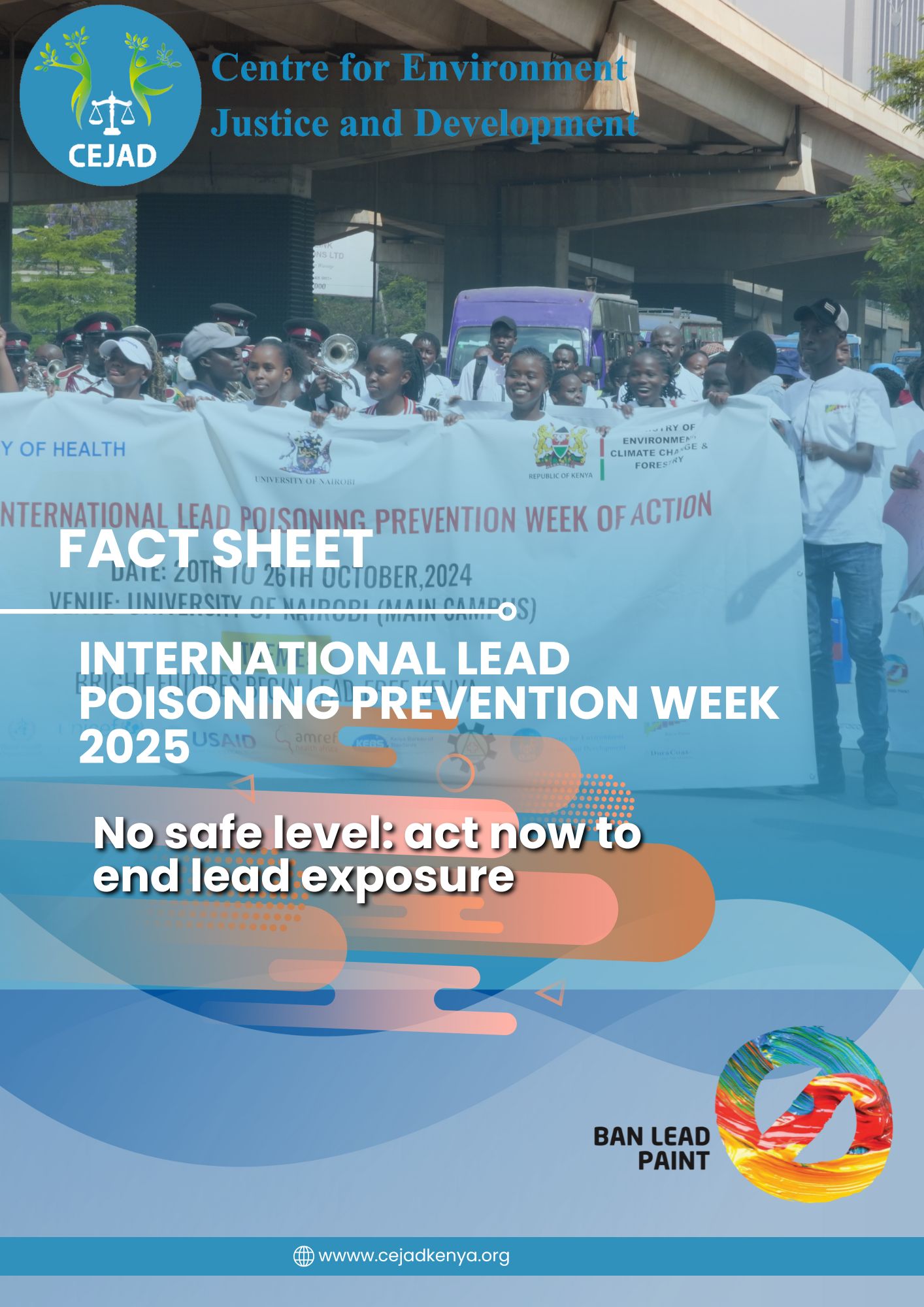
As Kenya marks International Lead Poisoning Prevention Week, the spotlight turns to the urgent need for greater public awareness on the dangers of lead in paints and other consumer products. Many households and schools remain unaware that common paints on the market may still contain hazardous levels of lead. Raising awareness is the first step toward protecting communities and ensuring every child grows up in a safe, toxin-free environment.
This Fact Sheet takes you through an understanding of lead poisoning, its causes, and its devastating health effects while emphasising the urgent need for stronger market surveillance, consistent enforcement of #KEBS standards, and promotion of lead-safe paint certification. Together, through informed choices and collective action, we can help make Kenya a lead-free nation and safeguard the health of future generations.